
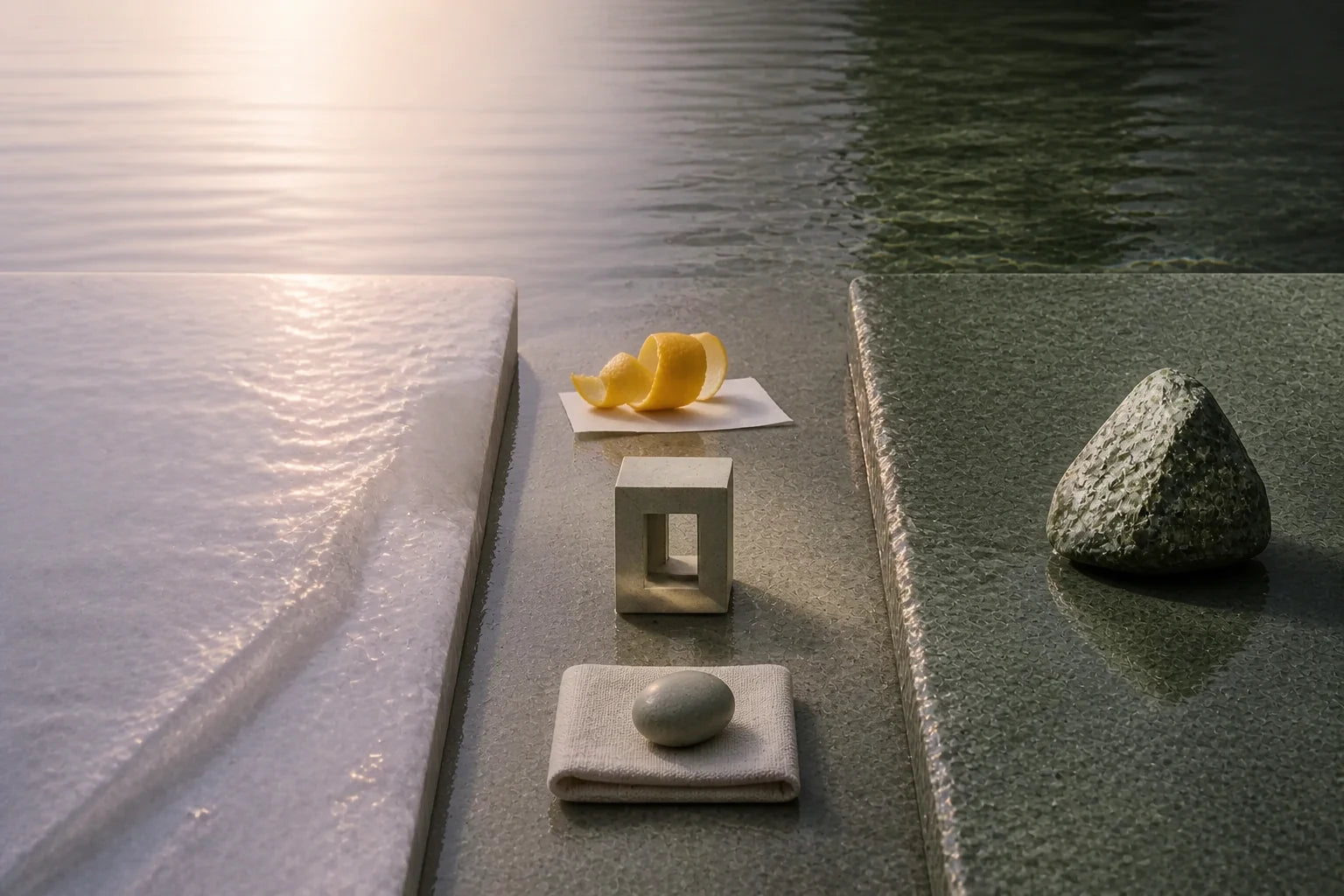
If two EVODUCK Moods fit, keep both as valid directions. Use the main result as the first path and the alternate as a real comparison, then let the confirmed scent-description directions, Room or Body Format, and the actual occasion decide. You do not need to force one Mood to describe you permanently.
The Mood Quiz returns a main and alternate result because sensory preferences can overlap. It is a navigation tool, not a personality test or diagnosis.
A close result is not an error. It means two directions are useful enough to compare with more concrete information.
Understand what the two results mean
The main Mood reflects the strongest pattern in the five scene choices. The alternate reflects the next strongest pattern under the same fixed scoring method.
Neither result proves:
- a personality type;
- a mental or emotional need;
- the scent notes you will enjoy;
- whether the ritual belongs in the room or on the body;
- which product will perform better;
- what you must choose forever.
The two results simply give you a smaller, more coherent comparison than starting from all five Moods.
Read the distinction between the pair
Use the short contrast that applies to your results:
- PAUSE vs. HOLD: more open space vs. warmer closeness.
- PAUSE vs. RISE: less input vs. a clearer beginning.
- PAUSE vs. ANCHOR: spare interval vs. tactile material presence.
- PAUSE vs. UNFOLD: open space vs. gentler, closer contrast.
- HOLD vs. RISE: warm layering vs. clear forward direction.
- HOLD vs. ANCHOR: enveloping warmth vs. composed texture.
- HOLD vs. UNFOLD: warmth and layering vs. softness and lower contrast.
- RISE vs. ANCHOR: open beginning vs. gathered material presence.
- RISE vs. UNFOLD: forward clarity vs. gentle transition.
- ANCHOR vs. UNFOLD: tactile definition vs. softened edges.
Choose the distinction that feels useful for this ritual, not the one that sounds like a more flattering identity.
Let scent preference settle the next step
Open the current product pages for both Moods and compare their confirmed scent-description directions. Write down the lead notes, supporting notes, and any familiar references you like or avoid.
Ask:
- Which profile contains more familiar notes?
- Which description fits the actual room or body ritual?
- Is any scent-strength information supported?
- What would I be assuming from the Mood image alone?
If one scent profile is clearly more appealing, it can settle the choice even when the two Mood descriptions both fit.
Use Candle Scent Families Explained if the note vocabulary is unfamiliar.
Choose the Format before the final product
The same Mood can lead to two different intended uses:
- Scented Candle: For the room, 8oz / 226g, $28.00.
- Massage Oil Candle: For the body, 4oz / 113g, $32.00.
If the task is room atmosphere, compare the two Moods as Scented Candles. If the intended task is body use, compare the two Body products using only the current information actually shown; this article does not supply missing formula, ingredient, direction, warning, care, or safety facts.
Do not compare a room product in one Mood with a body product in the other as though Mood alone makes them equivalent.
Use the real occasion as a tie-breaker
A Mood can change with context. Consider what you are actually choosing for:
- a shared living room;
- a reading space;
- hosting;
- a gift for someone with known preferences;
- a deliberate body ritual;
- another specific occasion.
Choose the direction that fits that occasion. You may choose the alternate next time without contradicting the first decision.
For a gift, do not assign a Mood to the recipient. Use their stated scent and Format preference whenever possible.
Return and change an answer if needed
The Mood Finder lets you revisit answered questions. If one scene choice no longer feels accurate, return to it and choose again. The scoring should recalculate from the current answers.
Do not repeatedly change answers just to obtain a particular Mood name. The useful output is a starting path, not a test score to maximize.
If no option feels right, you can skip the Quiz and browse the Mood Hub directly.
Do not blend products just because the result is close
Two valid Mood directions do not require burning two candles together or combining products. Start with one product and one intended use.
An unplanned blend makes scent preference harder to understand and adds another flame to supervise. A close Quiz result is a comparison invitation, not a blending instruction.
A two-Mood decision card
- Write the main and alternate Mood in plain sensory language.
- Identify the one distinction that matters for this occasion.
- Compare the confirmed scent-description directions.
- Choose Room or Body intended use.
- Select one product to begin with.
- Keep the alternate as a valid future path.
- Expect no diagnostic, therapeutic, or guaranteed personal result.
Frequently asked questions
Is my alternate Mood less accurate?
It is the second-strongest direction in the Quiz result, not an invalid answer. Use scent, Format, and occasion to compare it with the main result.
Can I be more than one Mood?
Mood is not a personality type. You can choose different directions for different rituals.
Should I buy both Moods?
Not because the score is close. Compare scent and intended use, then begin with the product that best fits the current task.
Can I retake the Quiz?
Yes. You can also adjust answered questions. Retake it when the context or your preferences genuinely change, not to chase a label.
Keep both directions useful
Return to the Mood Quiz, compare all five choices on the Mood Hub, or read How to Choose Fragrance by Mood before making the product decision.