
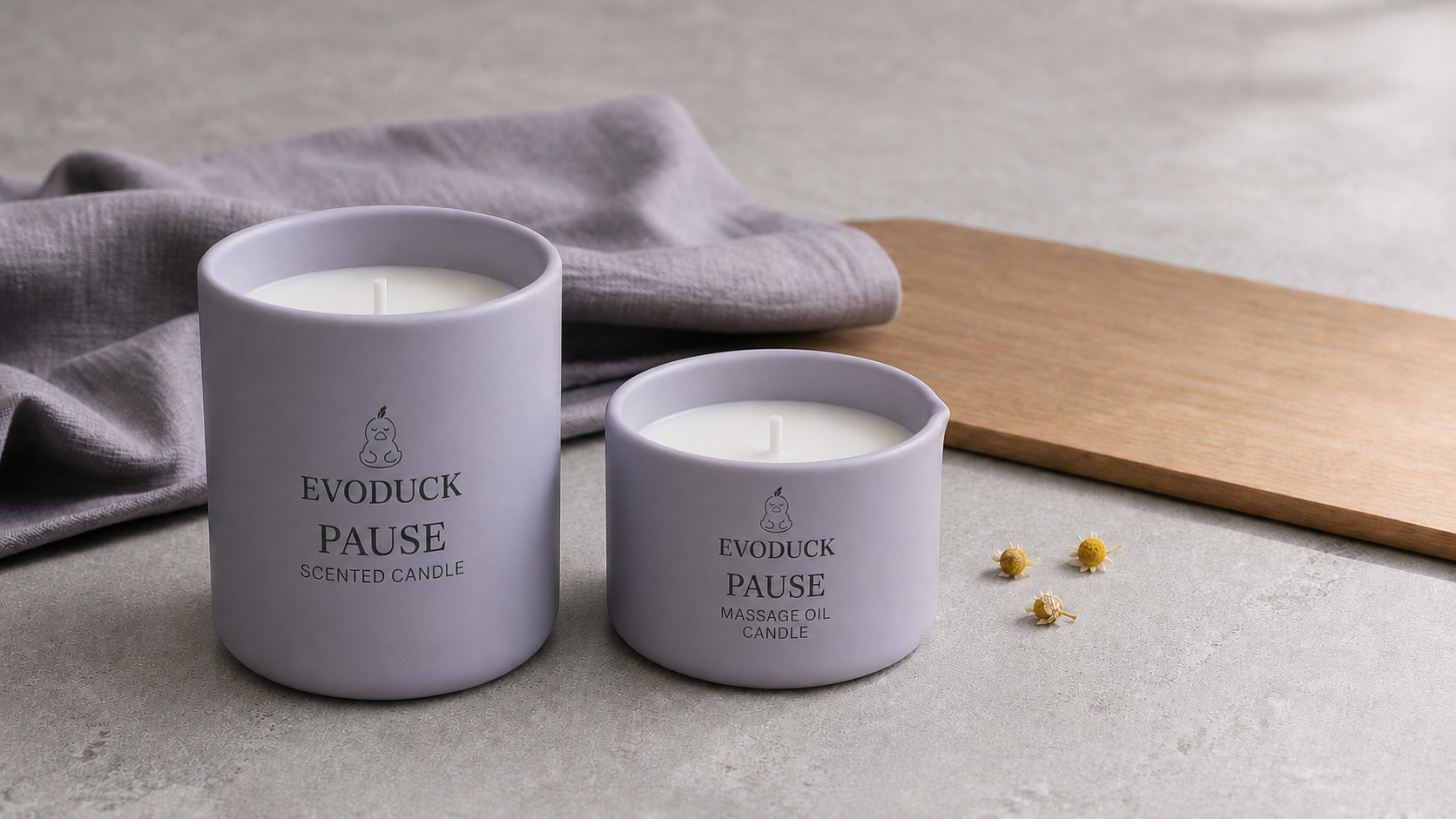
PAUSE is the EVODUCK direction of less input, more open space, and an unhurried pace. It helps you choose the atmosphere of a ritual. It is not a sleep product, a mental-health category, or a promise that a fragrance will change how you feel.
Its subtitle is Deep Rest, but the words describe a creative direction rather than a measured outcome. Choose PAUSE when spare, low-key, and open feels closer to what you want to make around you.
PAUSE removes rather than adds: fewer signals, clearer space, and room for the ritual to remain simple.
The core direction
PAUSE is useful when your first instinct is to reduce visual and sensory competition. Think of clear glass, open surfaces, quiet spacing, and a sequence that does not need to rush.
That does not mean the product is unscented, weak, or visually blank. It means the decision starts with restraint. The confirmed scent-description direction and Format make the choice more concrete after the Mood has narrowed the path.
What PAUSE is not
PAUSE is not:
- a promise of sleep or better sleep;
- a treatment for stress or anxiety;
- a diagnosis that you need less stimulation;
- a fragrance-strength rating;
- a rule that the ritual must happen at night;
- a fixed personality type.
You may choose PAUSE for one setting and RISE for another. The choice belongs to the moment and the ritual, not to an identity assigned to you.
How PAUSE differs from nearby Moods
PAUSE can sit close to ANCHOR and UNFOLD, but each begins somewhere different.
PAUSE vs. ANCHOR: PAUSE creates more space between things. ANCHOR brings attention toward texture, material, and a composed arrangement. If you want spare and open, begin with PAUSE. If you want tactile and gathered, compare ANCHOR.
PAUSE vs. UNFOLD: PAUSE reduces input. UNFOLD softens edges and lowers contrast. If openness is the main cue, choose PAUSE. If gentleness and closeness matter more, compare UNFOLD.
These distinctions do not predict a personal result. They help separate creative directions before you choose a product.
Confirm the scent after choosing the Mood
Mood is only the first layer. Read the current PAUSE scent profile and ask whether the described notes match fragrances you already enjoy.
Do not infer ingredients from the pale color, the name Deep Rest, or an image. A Mood name is not an ingredient list. Use the confirmed scent-description direction for comparison without turning it into formula or physical-smell proof.
You can use three questions:
- Which notes or scent families are named?
- Are those directions familiar and appealing to me?
- Does the description say anything supported about fragrance presence, or would I be guessing?
Read How to Choose Fragrance by Mood for the complete sequence.
Choose Room or Body
After Mood and scent, choose where the ritual belongs.
- For the room: the 8oz / 226g PAUSE Scented Candle, priced at $28.00.
- For the body: the 4oz / 113g PAUSE Massage Oil Candle, priced at $32.00.
The Formats are not two sizes of the same use. The room candle stays in the room and is never applied to skin. This article identifies the Body Format but does not supply formula, ingredient, direction, warning, or safety facts for it.
If the intended use is unclear, choose the Format before considering the vessel size.
When PAUSE may be a useful starting point
PAUSE may help narrow the catalog when you want:
- a room composition with less visual competition;
- a transition that feels unhurried rather than forward-driving;
- a sensory direction organized around space rather than warmth;
- a gift choice for someone who has explicitly said they prefer spare, low-key directions.
These are selection contexts, not claims that the product will make a person rest.
A PAUSE decision card
Choose PAUSE if most of these statements fit:
- Less input sounds more useful than more warmth or texture.
- Open space is a stronger cue than closeness.
- I have checked the actual scent description.
- I know whether the ritual belongs in the room or on the body.
- I am not expecting sleep, calm, relief, or another guaranteed result.
If the first two answers are uncertain, take the Mood Quiz or compare PAUSE with ANCHOR and UNFOLD.
Frequently asked questions
Is PAUSE a sleep candle?
No. Deep Rest is a Mood subtitle, not a sleep or wellbeing claim.
Is PAUSE the lightest fragrance?
PAUSE is not a strength ranking. The confirmed scent-description direction is not a physical-smell or strength test.
Can PAUSE be used in the morning?
Yes. Mood is not tied to a required time of day. Choose it when the direction fits the ritual.
What if PAUSE and ANCHOR both fit?
Compare open space with tactile material presence, then let scent preference and Format settle the choice. Read What to Do When Two Moods Fit.
Choose the direction, then verify the product
Explore PAUSE, compare all five directions on the Mood Hub, or use the Mood Quiz. Choose from the confirmed scent-description direction and intended Format without treating either as formula or physical-smell proof.