
Ingredient literacy starts by identifying what kind of text you are reading. A complete declaration, a short list of highlighted materials, a scent description, and a marketing phrase can all appear near one another, but they do not answer the same question.
This is a general educational guide. It does not publish or infer an EVODUCK formula, INCI list, ingredient declaration, direction, warning, safety result, or physical-product fact.
Read an ingredient declaration for the names it contains. Do not turn scent notes, artwork, or familiar material words into a formula.
1. Start with product identity and intended use
Confirm that the information belongs to the exact product you are reading about. A Body Massage Oil Candle and a Room Scented Candle have different stated roles even when both use candle language, a wick, fragrance references, or a ceramic vessel.
The FDA explains that product classification depends in part on intended use. Claims about treating disease or affecting the structure or function of the body can place a product in a different regulatory category. Read the FDA explanation of intended use and product categories.
On any store page, check that the product title, selected variant, Format, and any information panel refer to the same item. Do not combine details from different products into one guessed record.
2. Identify the kind of list in front of you
These common content types are easy to confuse:
| Content type | What it communicates | What it does not establish |
|---|---|---|
| Ingredient declaration | Names declared for a particular product | Exact percentages or performance |
| Highlighted materials | A selected subset used in explanation or marketing | The complete formula |
| Scent notes | The intended olfactory direction | Ingredient presence |
| Supplier material story | Information about one input | The finished product |
| Marketing language | Brand positioning or a sensory idea | Formula, safety, or universal suitability |
People often use "INCI list" as shorthand for a cosmetic ingredient list. Whatever term a page uses, first determine whether it is actually presenting a declaration for the exact product rather than a mood board or note pyramid.
3. Use list order as orientation, not a recipe
Under the FDA's summary of cosmetic labeling requirements, ingredients are generally declared in descending order of predominance, with exceptions for ingredients at one percent or less and for color additives.
Order can provide limited relative context, but it does not normally reveal:
- exact percentages;
- how ingredients interact;
- product temperature or texture;
- scent strength or room coverage;
- suitability for every person;
- a therapeutic or safety result.
Those conclusions cannot be reverse-engineered from list position.
4. Understand what "Fragrance" can mean
The FDA's Fragrances in Cosmetics guidance explains that a fragrance formula may contain multiple natural or synthetic components. Under U.S. labeling rules, those components can generally be declared together as "Fragrance."
The word therefore may not identify every component of the fragrance mixture. A scent note such as lavender, pear skin, black tea, or amber is not a workaround and should not be read as a chemical inventory.
If a component-specific question matters to you, ask the responsible company about the exact product. A general ingredient dictionary cannot confirm what is present in a particular item.
5. Read EVODUCK scent identities as scent identities
EVODUCK's five scent identities and customer-facing description directions are owner-confirmed:
- PAUSE: Lavender Chamomile Tea Woods
- HOLD: Cardamom Oat Milk Amber
- RISE: Bergamot Ginger White Tea
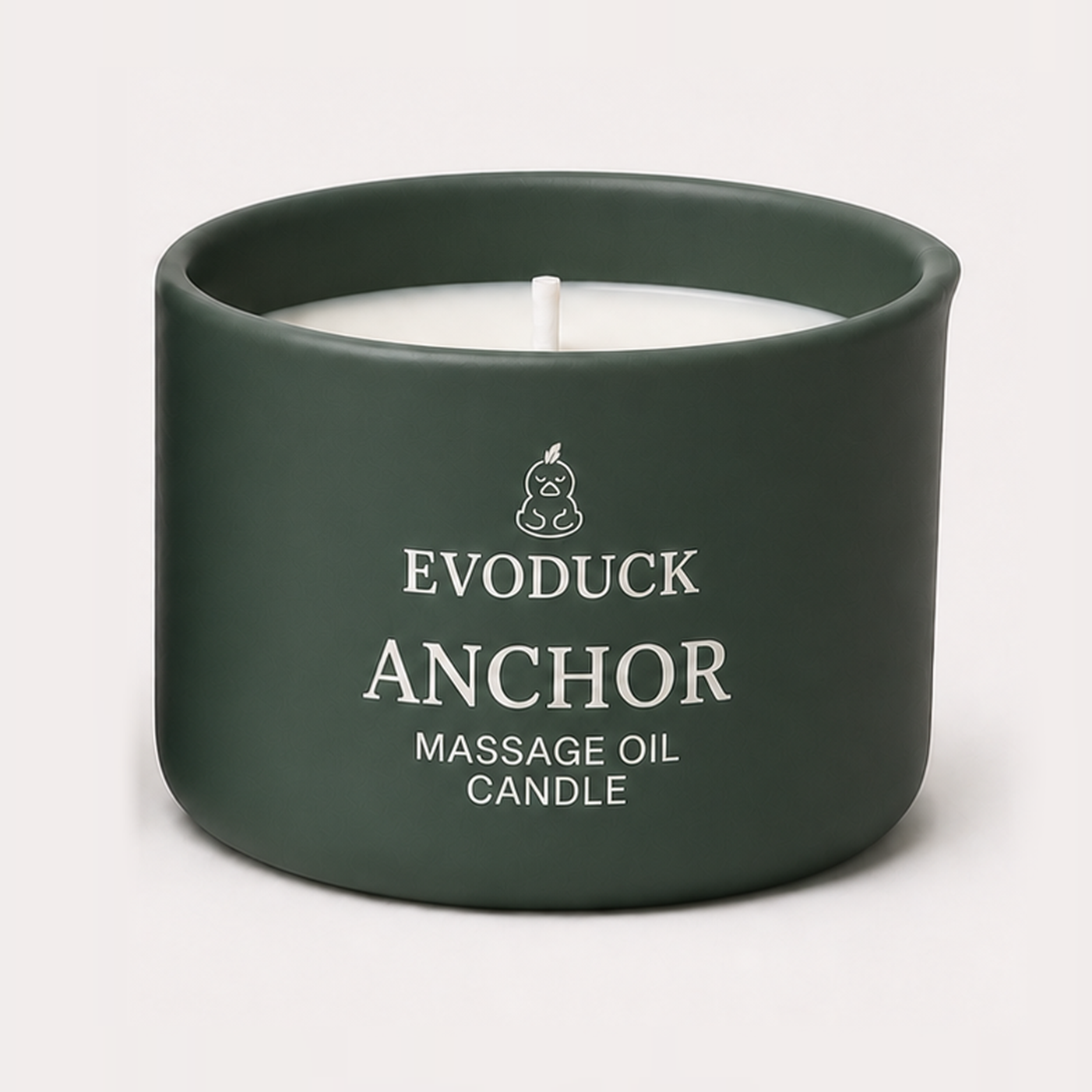
- ANCHOR: Cypress Black Tea Vetiver
- UNFOLD: Pear Skin Iris Musk
These phrases organize how the scents are described and compared. They do not claim that lavender, tea, oat milk, pear, iris, or any other named reference is present as an ingredient. They also do not prove a formula, physical smell test, strength, performance, or safety.
The full customer-facing comparison is in EVODUCK Candle Scents: Five Scent Identities.
6. Keep other product information in its own lane
An ingredient declaration, when presented, answers which names are declared. Intended-use copy, directions, warnings, and support information answer different questions.
This article does not supply missing product-specific information or an at-home use sequence. It gives no temperature, timing, pouring, application, skin-use, or testing instruction. Do not borrow those details from a Room candle, another brand, or social media.
Likewise, an AI Product Visual / 产品效果图 can identify a Mood, Format, and visual direction. It cannot show ingredients, prove a label, establish a formula, or demonstrate physical use.
7. Ask precise questions
If the exact product information does not answer something important to you, a precise support question is more useful than an assumption:
- Does this information belong to the exact Mood, Format, and size I selected?
- Is this a complete declaration or a highlighted-material list?
- What does the term "Fragrance" cover in the information provided?
- Which current page or package panel governs this item?
- Who should I contact about an inconsistency?
This guide does not promise that every question has a public answer. It shows how to avoid inventing one.
An ingredient-reading checklist
- I have identified the exact product and intended use.
- I know whether I am reading a declaration, highlighted materials, scent notes, or marketing copy.
- I have not treated scent notes as ingredient claims.
- I understand that list order does not reveal an exact formula.
- I understand that "Fragrance" may refer to multiple components.
- I have not inferred performance, suitability, or safety from one ingredient name.
- I will ask the responsible company if a product-specific answer matters and is not stated.
Frequently asked questions
Is an ingredient declaration the same as a list of key ingredients?
No. Key ingredients are a selection. A declaration is a different kind of product information.
Does "Fragrance" mean there is only one fragrance ingredient?
Not necessarily. FDA guidance explains that fragrance can be a mixture declared under the general term "Fragrance."
Can ingredient order tell me exact percentages?
No. It gives limited relative information and has regulatory exceptions. It is not a quantitative formula.
Are EVODUCK scent notes ingredient claims?
No. They are owner-confirmed customer-facing scent directions. They do not identify formula, ingredients, INCI, or physical smell.
Does this article confirm an EVODUCK formula or label?
No. It is an educational reading guide and does not represent product-specific formula, label, direction, warning, safety, packaging, or physical-product evidence.
Keep the categories separate
Read the exact text for the job it performs: identity for what the product is, a scent description for the intended olfactory direction, an ingredient declaration for the names it declares, and support information for unanswered product-specific questions. That separation is the simplest way to avoid turning a familiar word into an unsupported product fact. Compare the current Body collection and review Safety without treating either page as a formula declaration.